How agentic operations actually save time
Operations software made you choose between powerful-but-rigid and easy-but-dumb. Here's how an AI agent collapses that trade-off — from setting it up, to capturing clean data, to getting answers out — for the inspections, audits, checks and incidents of any sector.
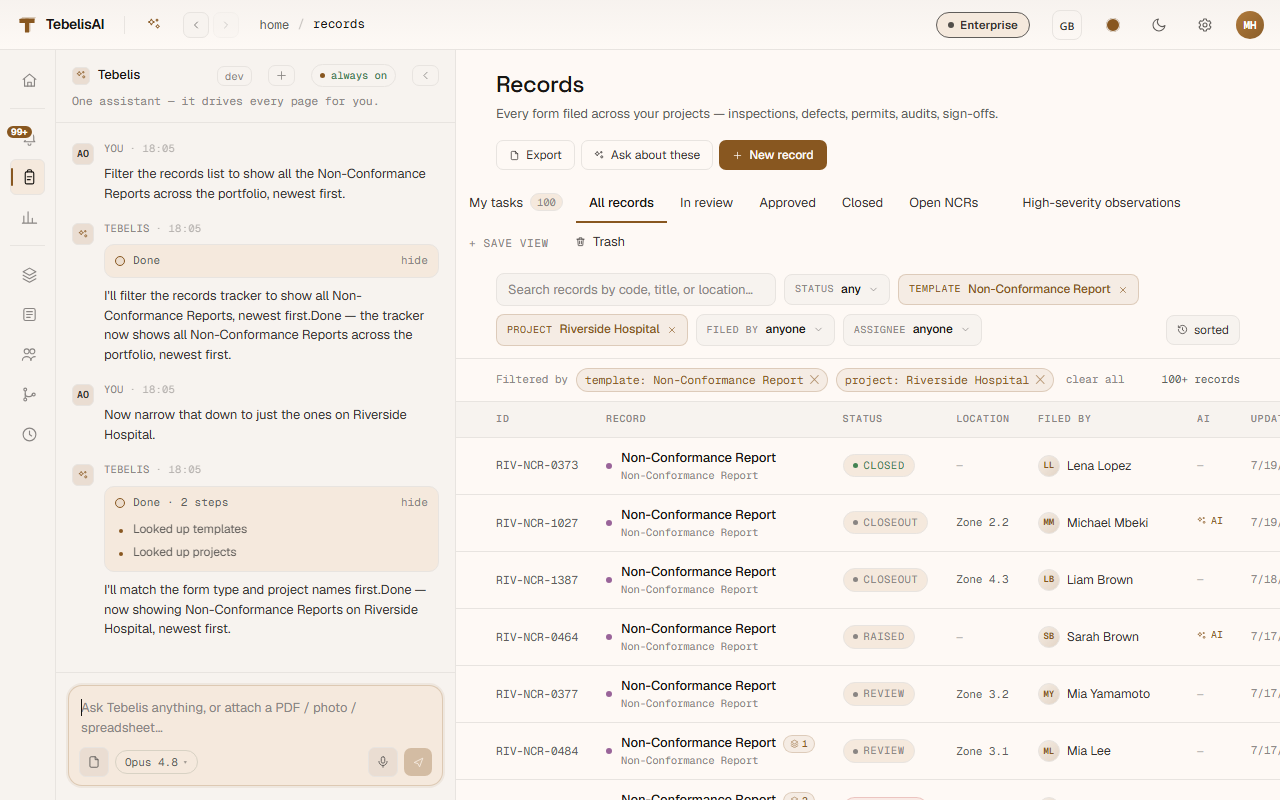
Agentic operations: a new productivity model
Operations tools made you choose between powerful-but-rigid and easy-but-dumb. An agent collapses that trade-off — and the gains compound across setup, capture and analysis.
Read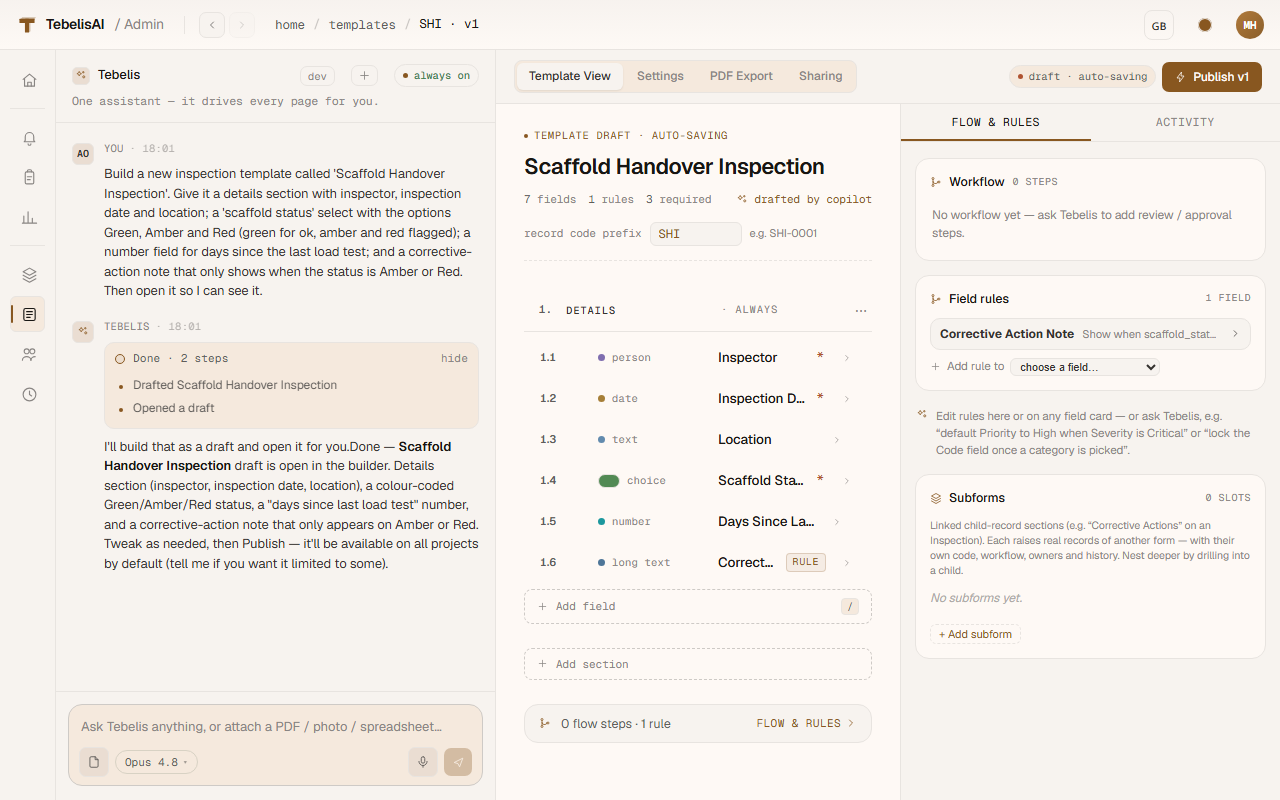
Live in a day, not a quarter
Most of the cost of new operations software is configuration — forms, workflows, permissions — not the software itself. When you describe what you need and review a draft, setup stops being a project phase and becomes a conversation.
Read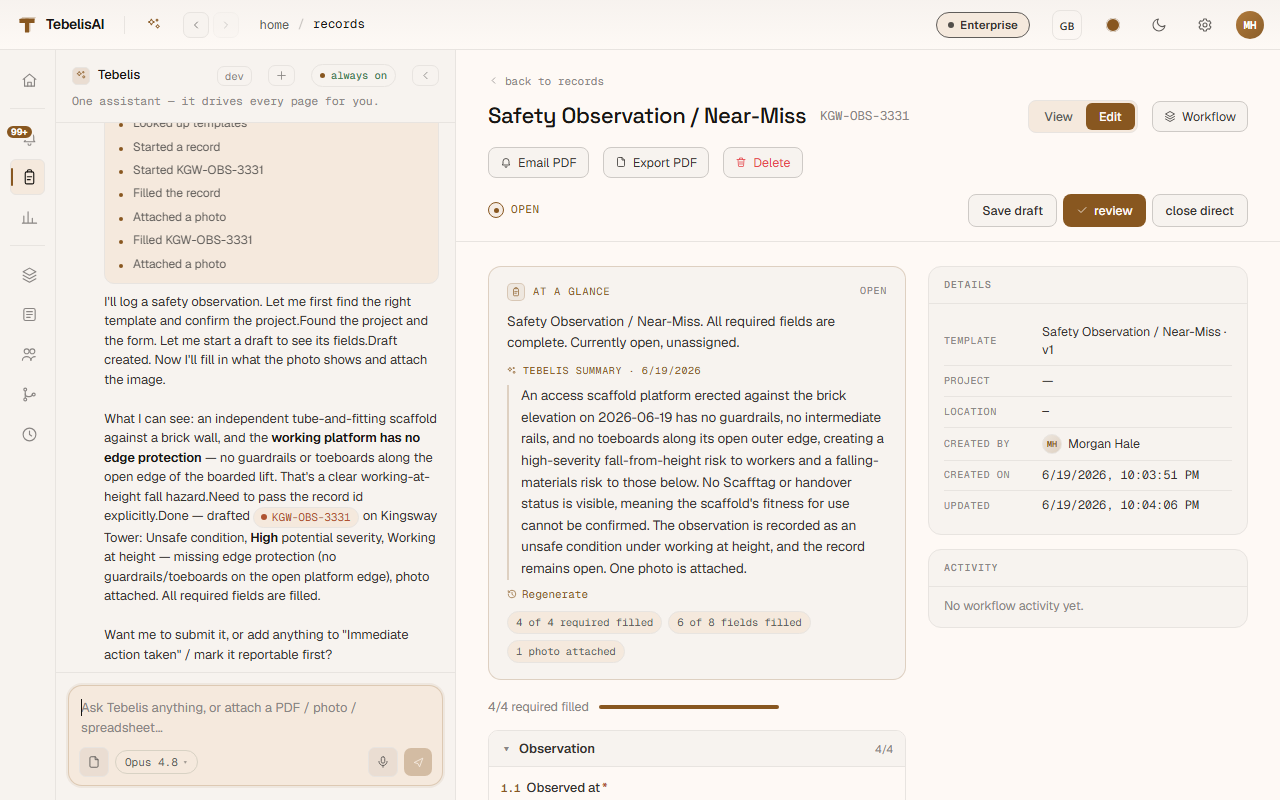
The fastest form is the one you barely fill in
Adoption dies at data entry — not because people don't care, but because the conditions where operations work happens are hostile to typing. Let the agent do the structuring from a photo or a sentence, keep a human on confirm, and clean, timely records finally show up.
Read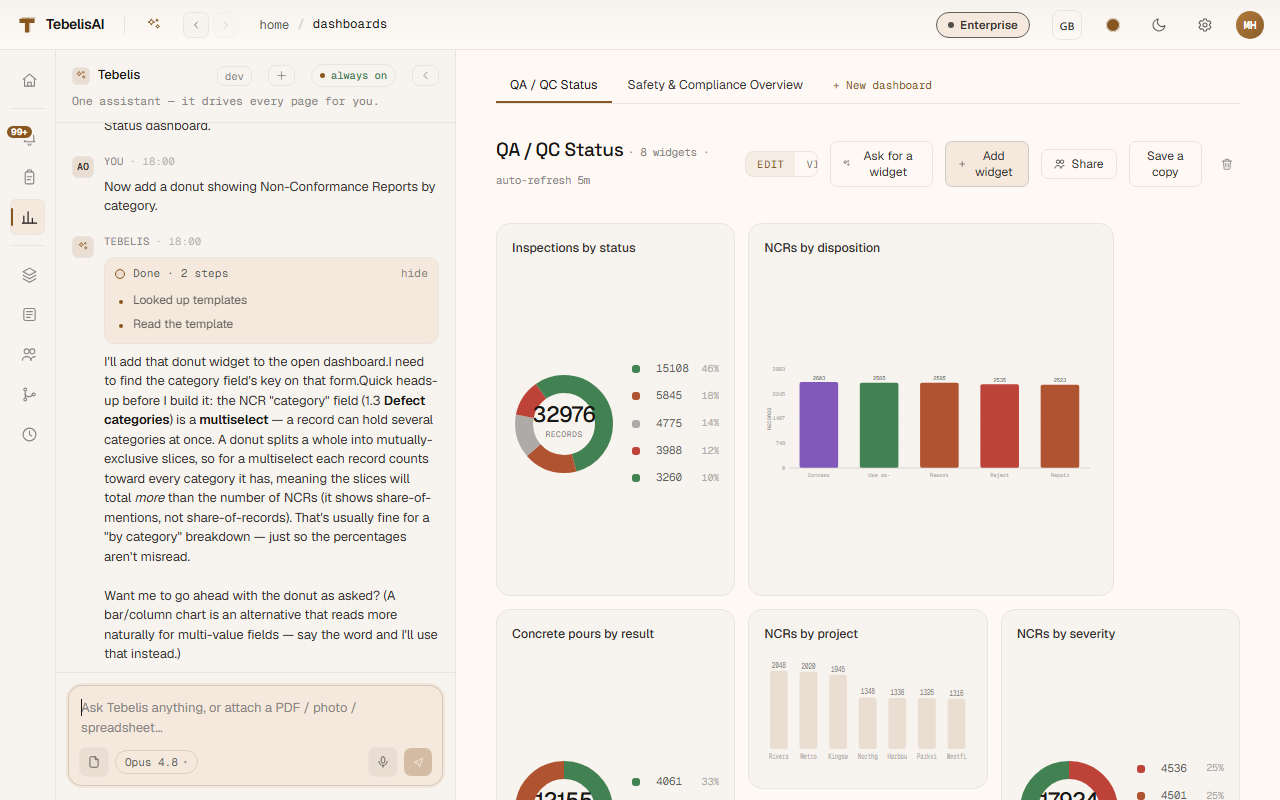
From clipboard to insight
Export, clean, pivot, paste, circulate — and the chart is stale before anyone reads it. Agentic analysis turns reporting from a weekly task into a question that costs one sentence, with every number traceable to the records beneath it.
Read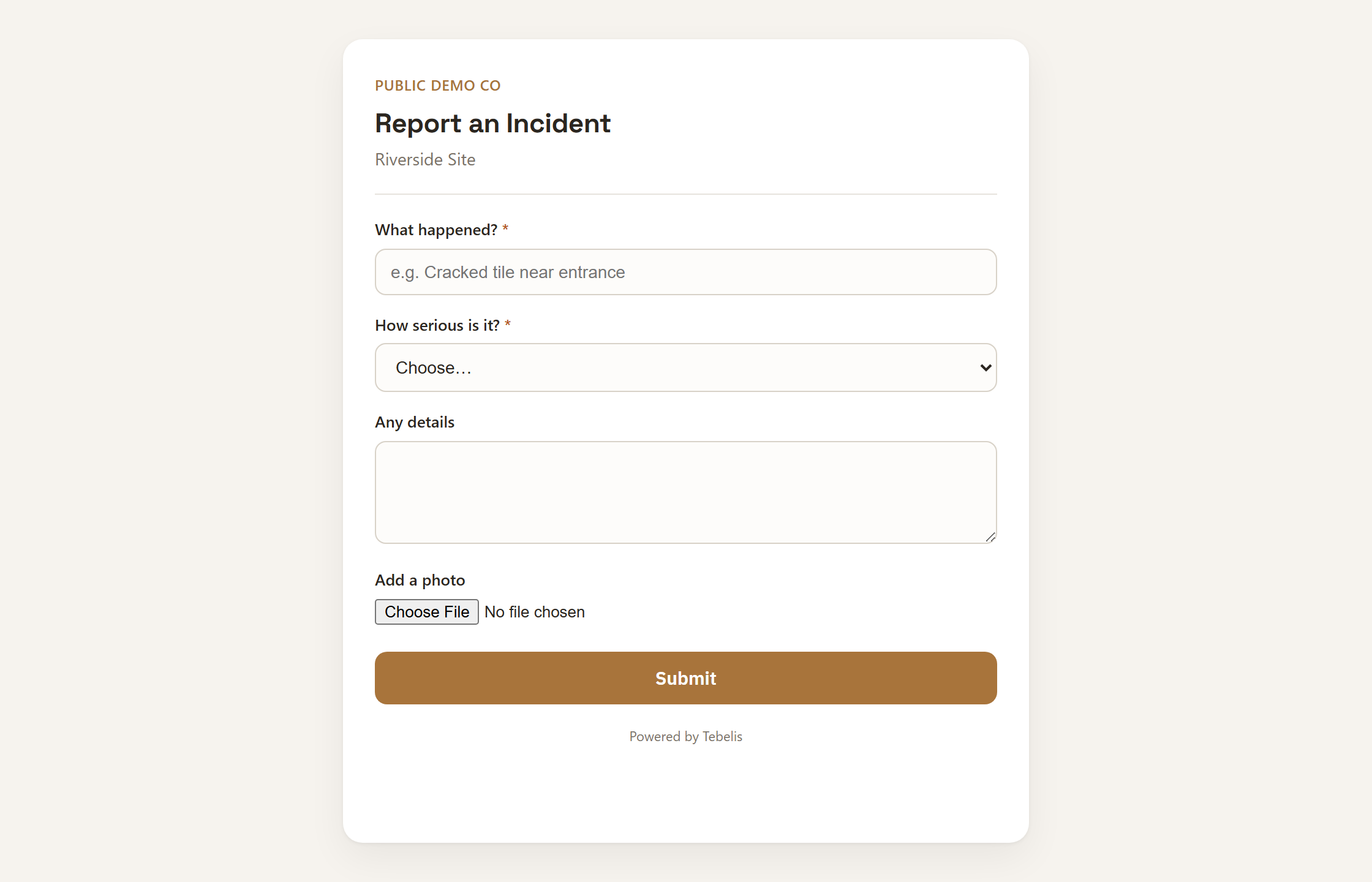
Data from people who'll never log in
Tenants, visitors, suppliers — the reports you need most often come from people outside your workspace. A link or a QR code turns their submission into a structured record in the right workflow: no seat, no app, no re-keying.
ReadStop documenting your process. Run it.
Every team has a written process; few run it the same way twice. When the workflow lives in the record itself — owned states, automatic hand-offs, locked history, send-backs that carry a reason — the right path becomes the easy one.
ReadThe new age of field management: setup without the consultants
For decades, rolling out software for field work meant an implementation project: workshops, an integrator, a quarter of calendar time — and a bill for every change after go-live. In the new age, you describe the work — or upload the Excel and PDF forms you already run — and review what the agent builds. The expertise moves into the product.
ReadThe new age of field management: filing without the clicks
Field records are born up ladders, in the rain, in gloves — conditions where a thirty-field form on a phone doesn't get filled, it gets deferred. In the new age you say what happened or show a photo, confirm the draft, and the workflow carries it to whoever acts next.
Read